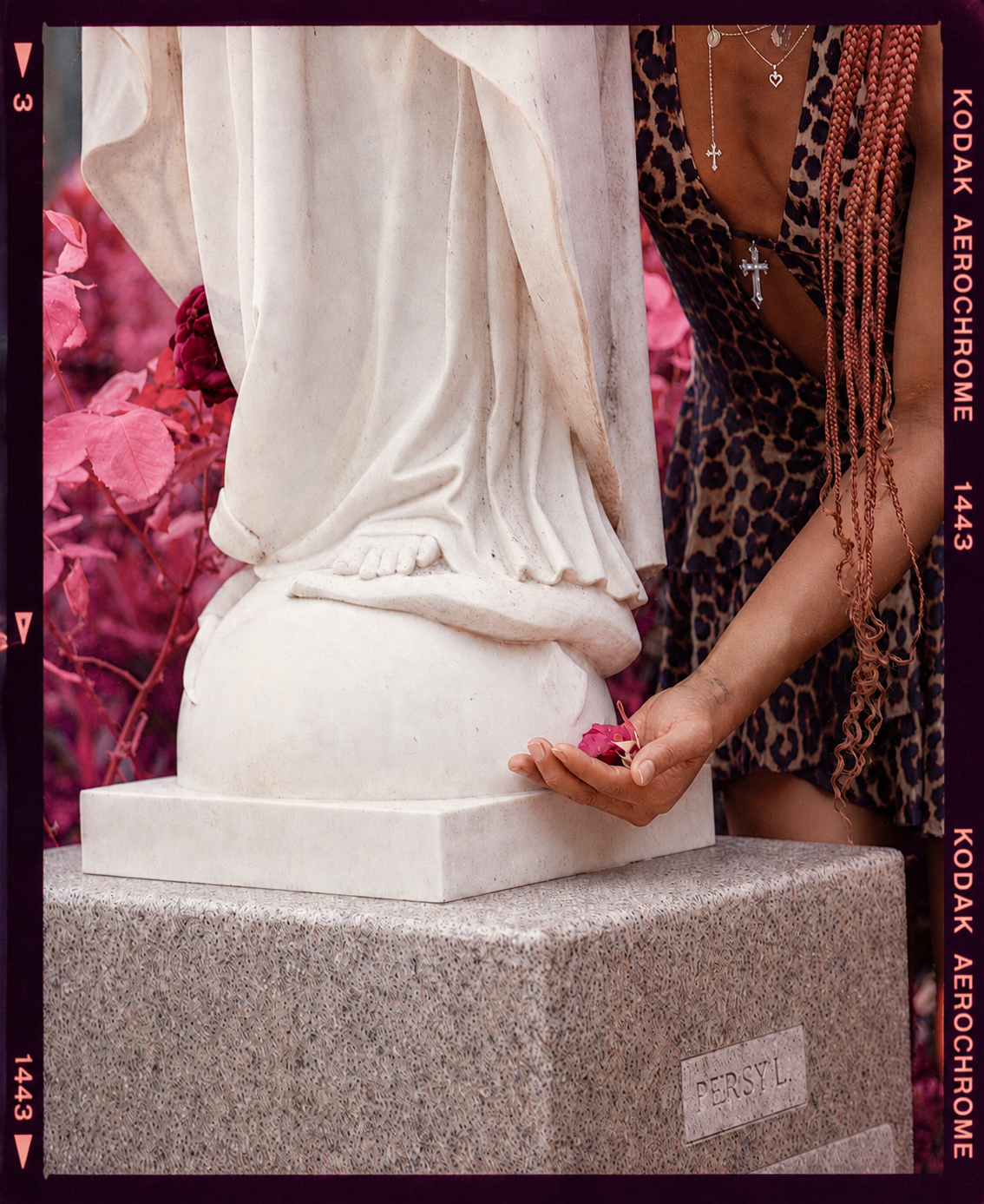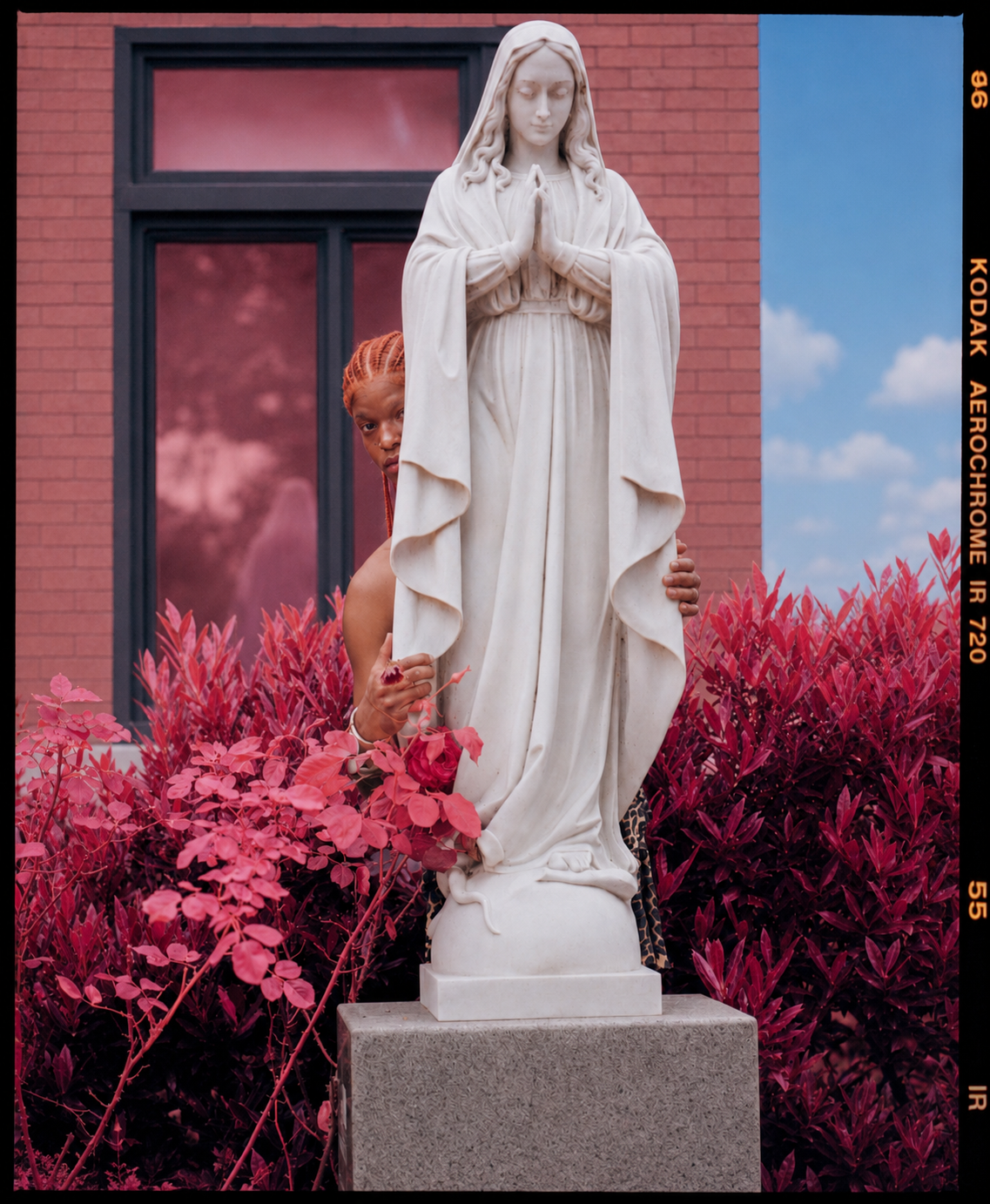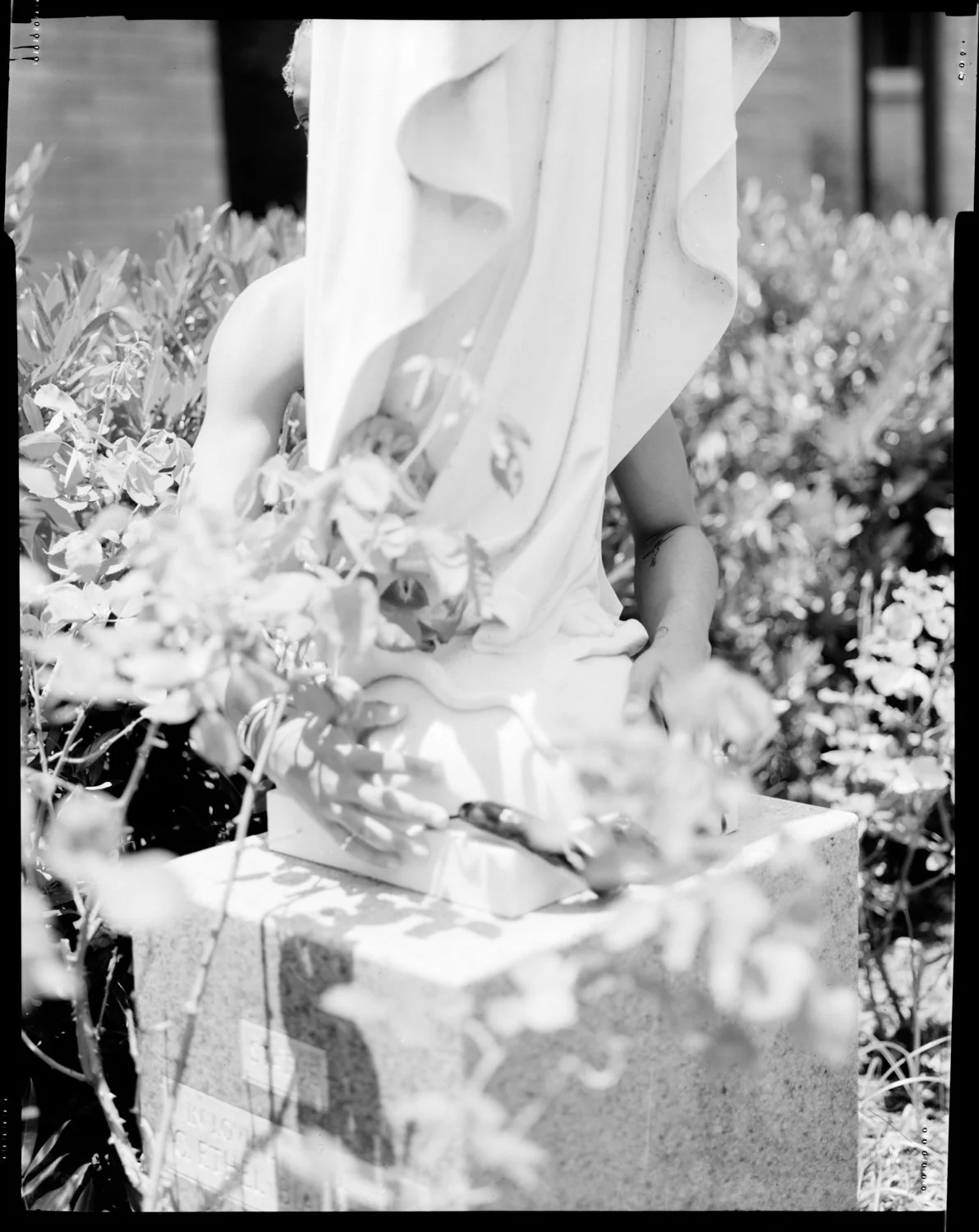
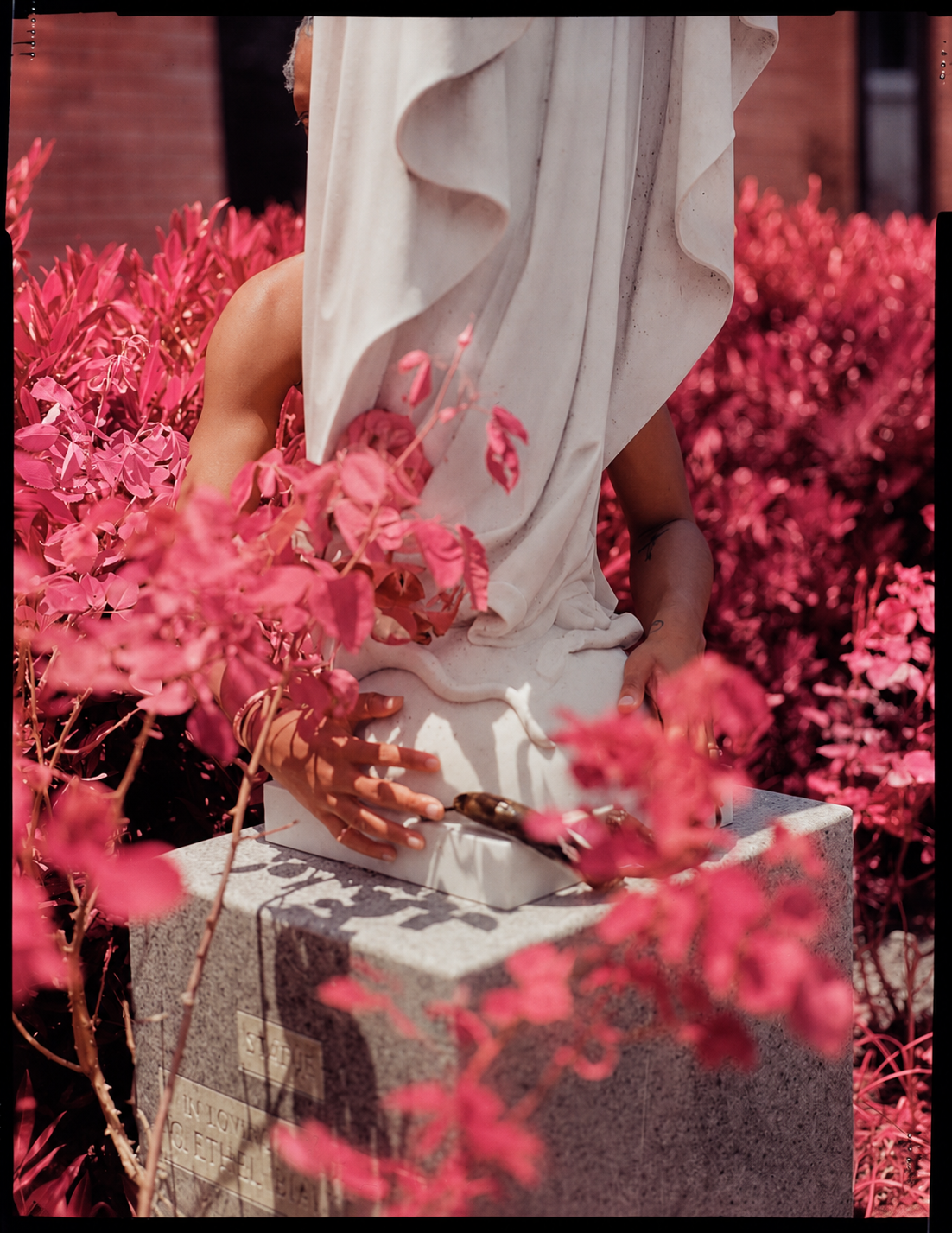
Shadow Madonna is about the rematriation of women in the shadows who are giving birth to our new world. When the Catholic Church colonized and violently overthrew the spirituality of the Indigenous Americans in their “New World,” they did so through a now classic strategy of displacement and looting. At the Vatican archive known as Anima Mundi (the Soul of the World), one can still find sacred objects once experienced in their original context not as objects but as extensions of the self or conduits of divinity; which makes looting closer to an amputation. Masks from Africa, Quetzalcoatl in stone, Polynesian totems are among the orphaned kin now held in the pristine prison halls of Rome’s vaults.
The Holy Roman Empire never ended — so Philip K. Dick would come to believe, writing in the feverish final years of his life, after making contact with a paranormal entity he could only name as the pink light.
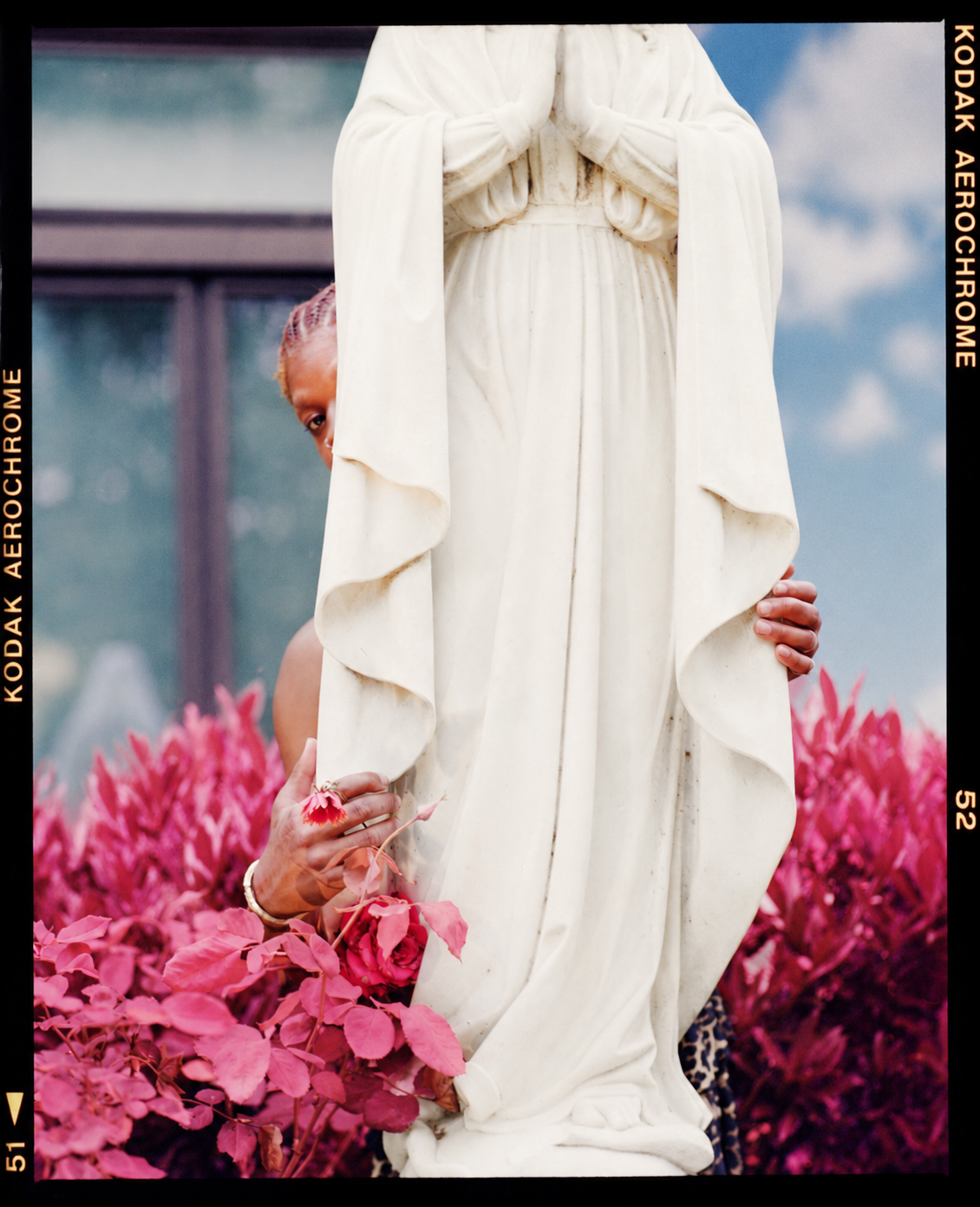
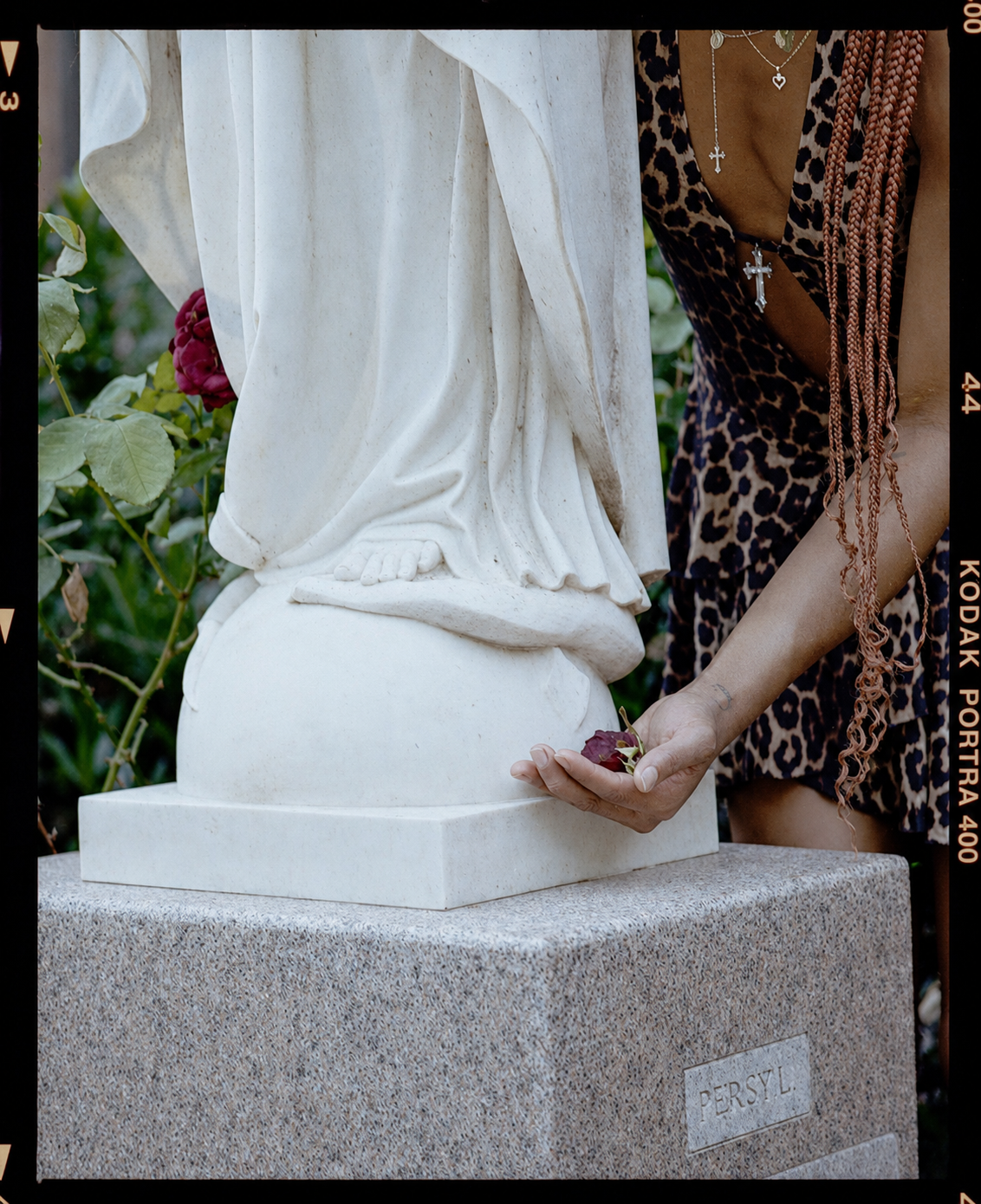
My photographic series stages Black and indigenous transgender women next to white Marian statuaries that are a recurring presence in the American South, where the evangelical spirit of conversion still burns bright. As a transgender woman tracing her lineage to the Yucatan Maya, and perhaps even earlier to the ancient mother culture of the Olmecs, the pain of disinheritance and forced assimilation is still felt in my bones each time I am asked to provide proof of my identity through tribal affiliation cards, the same method still being used to disenfranchise, erase, and selectively curate who counts as a “native” to this land.
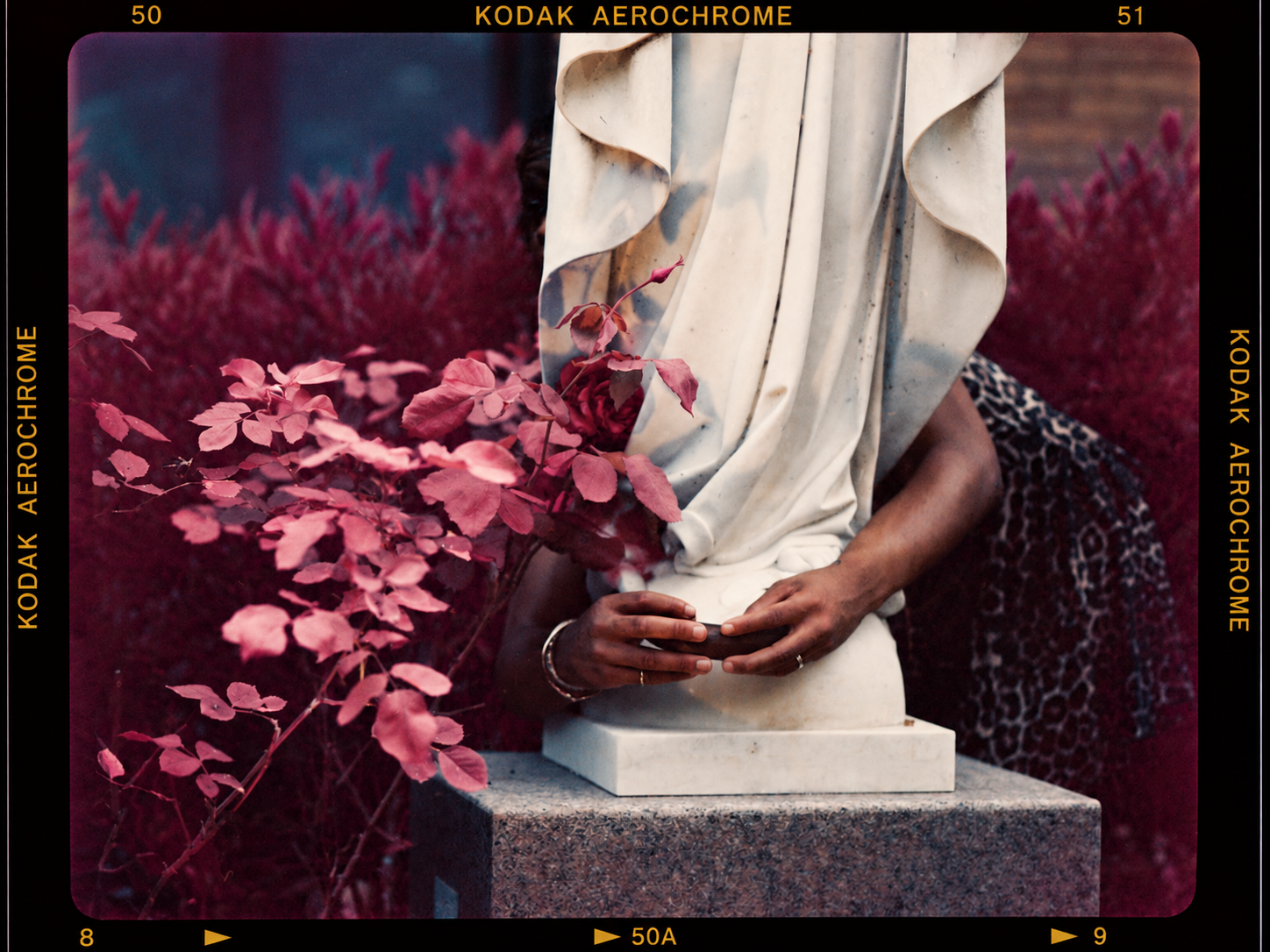
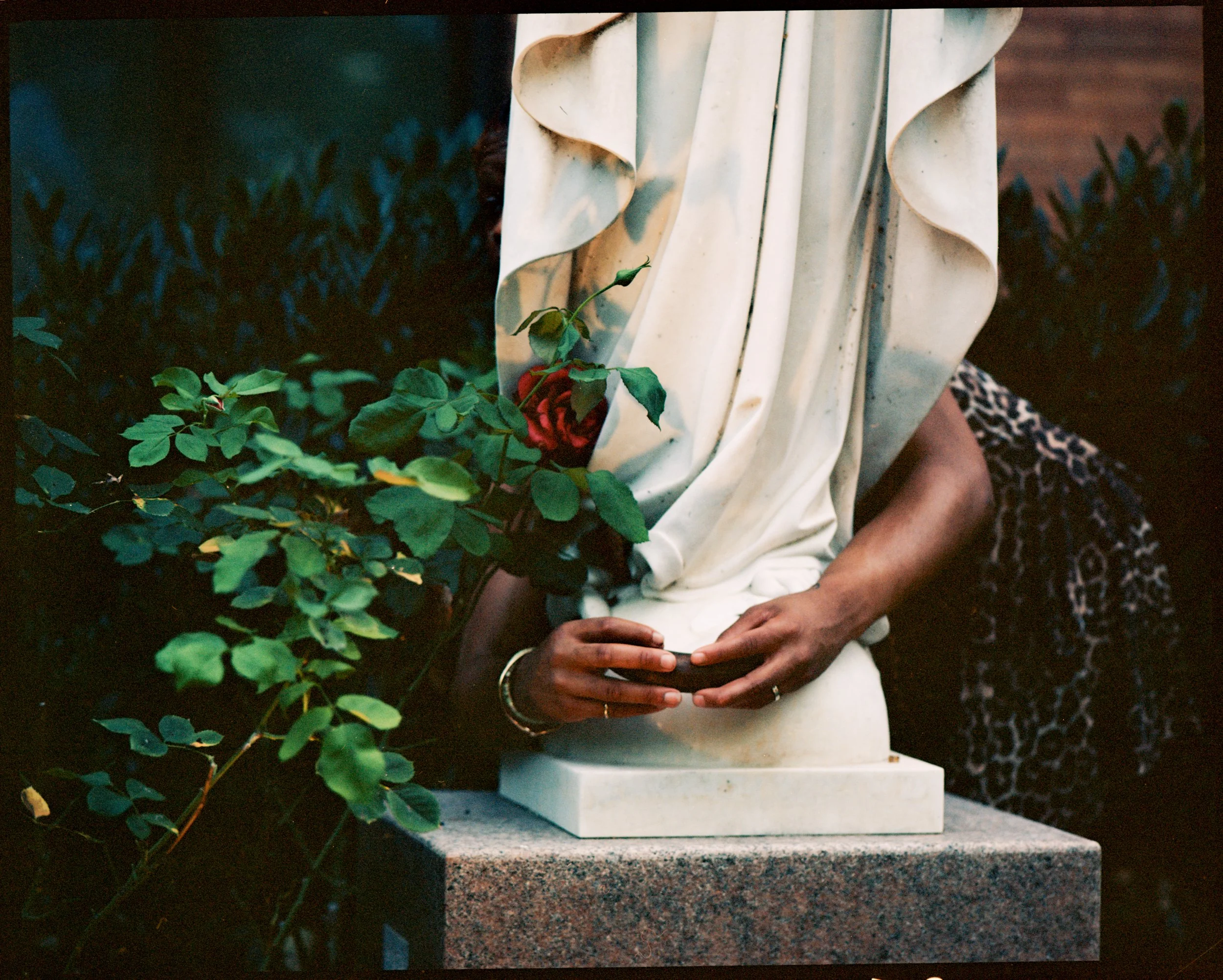
My portraits, shot originally on medium format color film, restage the conditions for miraculous apparition by tactfully deploying the new class of AI image generation tools to mimic color infrared photography, a film format that is effectively extinct, as color chemical labs can no longer process its sensitive film emulsion. The film stock was originally manufactured and designed for military surveillance application, turning green foliage into sexy magentas and skies into deep, cobalt blue heavens. Perhaps this is a running joke in photographic theory and discourse, that the practice traces all of its beginnings to the art of war; a throughline of investigation that has been elegantly mapped by many scholars including Paul Virilio in his classic text, War and Cinema.
Within the fine art setting, color IR was perhaps propelled to cultural and museological mainstream by the Irish photographer Richard Mosse, using volumes of infrared rolls to create beatific portraits of militants from the Democratic Republic of the Congo amidst pink-hued landscapes. His identity as a white (European) male outsider glamorizing violence is still a prevailing and contested critique of the work, which I neither feel responsibility to settle or extend. Rematriation is a fairly recent political and social concept (without entry in official dictionaries) that advocates for a caring relationship to our injured, traumatized past. At its base, I believe it is encouraging us to not only rethink the balance of power – its distribution and makeup – but to rethink the very supremacy of power the concept has been accorded in critical discourse; it was perhaps the greatest fixation for Michel Foucault, the revered French post-structuralist. The pink light would tell the mad PKD, “the time of power is ending, and wisdom shall take its place.”
Nothing can be done to undo the work of Richard Mosse, just as nothing can be done to undo the genocide o women and indigenous elders who were once the original stewards of the vast gifts of the Americas. The Vatican will not let me into their vaults, and United Fruit Company will not give up the profits they extracted from the fecundity of the tropics.
Throughout the series, I deploy a curated selection of props and costumes chosen for their affiliation to animal and vegetal kingdoms: cheetah print dresses, bananas and tropical fruit, and native wildflowers function as totemic signals acting as ritual offerings and stark reminders of what white marble replaced. Neither are the postures antagonistic, competitive or defacing; quite the opposite, I would describe them as sororal, careful, compassionate.
How do we decolonize spirituality, after all these centuries? My answer might sting some conservative readers. Transgender women are already doing it. A hated and vilified minority, in their presence and embodiment lies a truth that patriarchal, ecclesiastical authority refuses to acknowledge: the kingdom of heaven lies within non-duality. When the desiring subject and the desired object act as one, the gap between the imperial “I” of modernity and the feared, dark other of the colonies is completely eradicated.
The accusation leveled at transgender women — fake, synthetic, a performance of something real underneath — is the same accusation now leveled at the AI-generated image: not real, not earned, a shortcut standing in for the authentic thing it imitates. I don't think this is a coincidence. Transgender women have always known otherwise — that the self can be constructed with full intention and lose none of its sanctity for having been built.
The AI-rendered infrared photographs in this series are made things standing beside chemically-made things, neither one more forged than the other, both reaching for a light neither can fully picture on its own.
Transgender women embody this godly truth by willingly and enthusiastically choosing to surrender masculine power, having known its privileges and advantages, and every day they wake up and choose to listen to the pink light. Shadow Madonna is dedicated to all the girls who are choosing to live and abide in this great New World — made, remade, and unashamed of either.