ARTIST STATEMENT
On April 23, 2026, driving past Calvary Cemetery on the BQE in Queens, I saw three million dead through a highway window. The largest cemetery in the United States by interments — 365 acres consecrated in 1848 to receive the Catholic immigrant poor, wave after wave: Irish, Italian, German, then Latin American — visible for exactly the length of an on-ramp, and then gone. I had passed it before without seeing it. That morning I saw it.
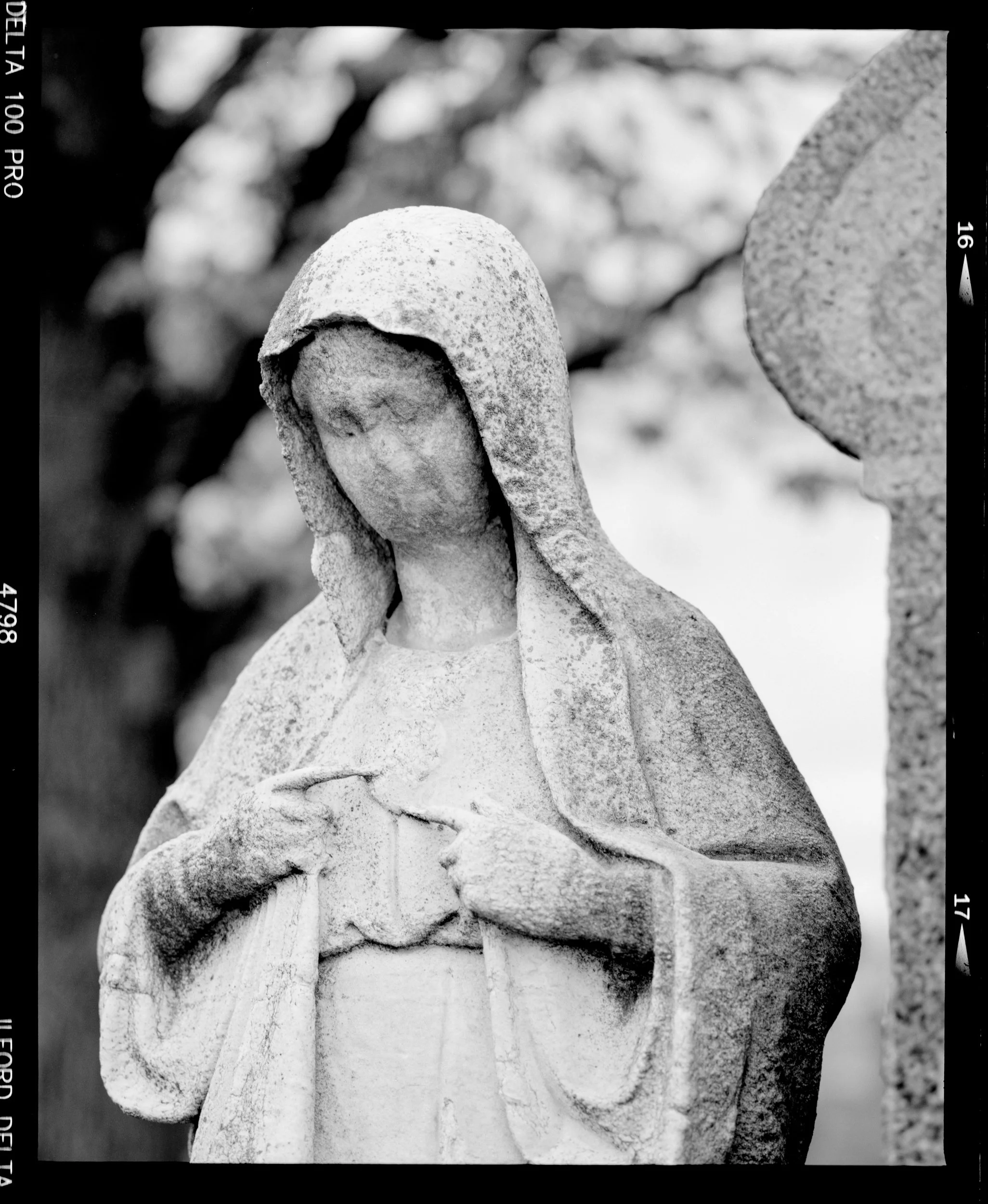
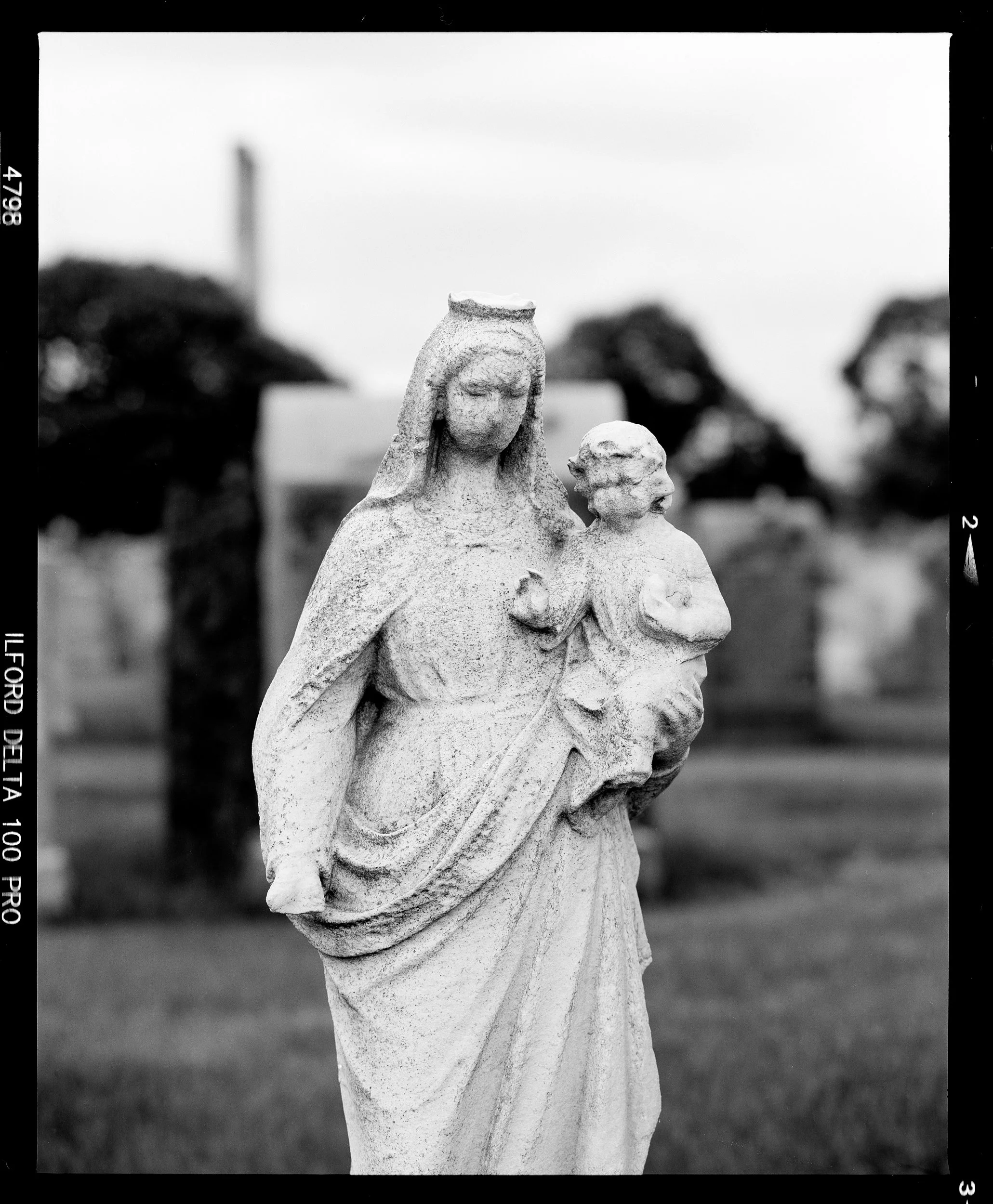
What I saw, or what saw me, was this: the Marian statues atop the headstones have been chemically disfigured by acid fumes from a copper refinery that once operated across Newtown Creek in Greenpoint. Their marble faces are dissolving. Not triumphant Madonnas — working-class Marys whose grief is written in their erosion, whose surfaces record a century of industrial violence the way skin records a life. The archdiocese sued the refinery and won. The faces kept dissolving anyway. They are still dissolving.
Adjoining Calvary is Mount Zion Cemetery, established in 1893 for Eastern European Jewish immigrant communities. In its Workmen's Circle section, 44 victims of the 1911 Triangle Shirtwaist Factory Fire are buried — predominantly young immigrant Jewish and Italian women and girls, some as young as fourteen, locked inside a factory by management who feared union organizers more than fire. They jumped from windows rather than burn. Two blackened smokestacks from a defunct city sanitation incinerator loom over their graves. The monument erected by their sisters and brothers of the Ladies Waist and Dressmakers Union reads: In memory of the young men and women who perished in the fire at the Triangle Waist Company's shop. Grief as labor solidarity. Mourning organized into stone.
From the cemetery and its histories, two bodies of work have emerged. This is the first.
The Cavalry: Studies at Calvary Cemetery is a series of medium format photographs made at Calvary Cemetery on Ilford Delta 100 film — silver gelatin prints shot under overcast skies, in the gray Catholic light that refuses glamour without going grim. The figures here — Madonnas, angels, pietàs — bear the chemical erosion of the Phelps Dodge copper smelting works that operated across Newtown Creek from 1871 to 1983. Their surfaces dissolve slowly into the air. The immigrant women and girls buried nearby were killed by the labor that employed them. The Acheiropoieta against the Anthropocene. Militant mothers have held this grief — for how long?